Sheets · Sleep comfort · Cotton
Percale or Sateen? Choosing Cotton Sheets for Cooler Sleep
The difference between percale and sateen is not simply a matter of crisp versus silky. Their weave changes the way cotton feels against the skin, how fabric drapes, and how a bed responds to heat through the night. For sleepers who wake warm, understanding those details can help turn a familiar set of sheets into a more comfortable sleep environment.
Cotton sheets are often described with shorthand: percale is cool, sateen is soft; percale is crisp, sateen is smooth. These labels point in a useful direction, but they are not guarantees. A sheet’s feel depends on more than its weave. Cotton fiber, yarn construction, fabric weight, room temperature, bedding layers, and even the way sheets are washed all have a part to play.
The choice, then, is less a contest than a fit. Percale may suit someone who likes a light, airy hand and a neat, almost shirt-like finish. Sateen may appeal to someone who prefers a silkier surface and a fluid drape. Both are cotton weaves. Both can be comfortable. And neither can promise that a sleeper will stay cool in every climate or under every comforter.
For anyone comparing breathable sheets, the best approach is to look past labels and ask practical questions: What does the fabric feel like? How does the room hold heat? Is the bed layered lightly or heavily? Is the cotton long-staple or short-staple? How will the sheet behave after repeated laundering? Those questions reveal more than a single number on a product tag.
First, what does “weave” mean?
Weave describes the pattern in which lengthwise yarns, called warp, cross widthwise yarns, called weft. The basic structure affects the surface, flexibility, and drape of the finished cloth. Percale and sateen are two ways of arranging those yarns, not two different kinds of cotton.
In a standard percale weave, yarns cross in a simple one-over, one-under pattern. That balanced construction gives the fabric a matte appearance and a clean, crisp hand. Sateen uses a different arrangement: yarns pass over several threads before crossing beneath another. The longer “floats” on the surface create a smoother feel and a subtle sheen.
Those structural differences matter, but they do not act like a thermostat. A weave can influence how fabric touches the body and how readily it feels airy or substantial. It cannot control the temperature of the entire bedroom, remove excess warmth from a mattress, or replace good ventilation. Think of weave as one part of a sleep system rather than a standalone cooling technology.
Percale: crisp, plain, and often airy
Percale’s appeal is immediate for some sleepers. It feels smooth but not slick, with a crispness that can bring to mind a freshly laundered cotton shirt. The surface is usually matte, and the fabric tends to have a more structured drape than sateen. As it softens with use and washing, it may keep much of that fresh, cool-to-the-touch character.
Because percale is made in a balanced, plain weave, it is commonly chosen by people who prefer breathable cotton sheets and a lighter sensation around the body. That makes it a frequent consideration for warm sleepers, summer bedding, or rooms that do not cool easily at night. Its appeal is not limited to hot weather, however: some people simply prefer the crisp texture in every season.
Percale can wrinkle more noticeably than sateen. For some, the relaxed creases are part of cotton’s honest, lived-in look. For others, they are a reason to choose a different finish or to remove sheets promptly from the dryer. Washing and drying according to the care label helps preserve the fabric’s feel; excessive heat can contribute to shrinkage and wear over time.
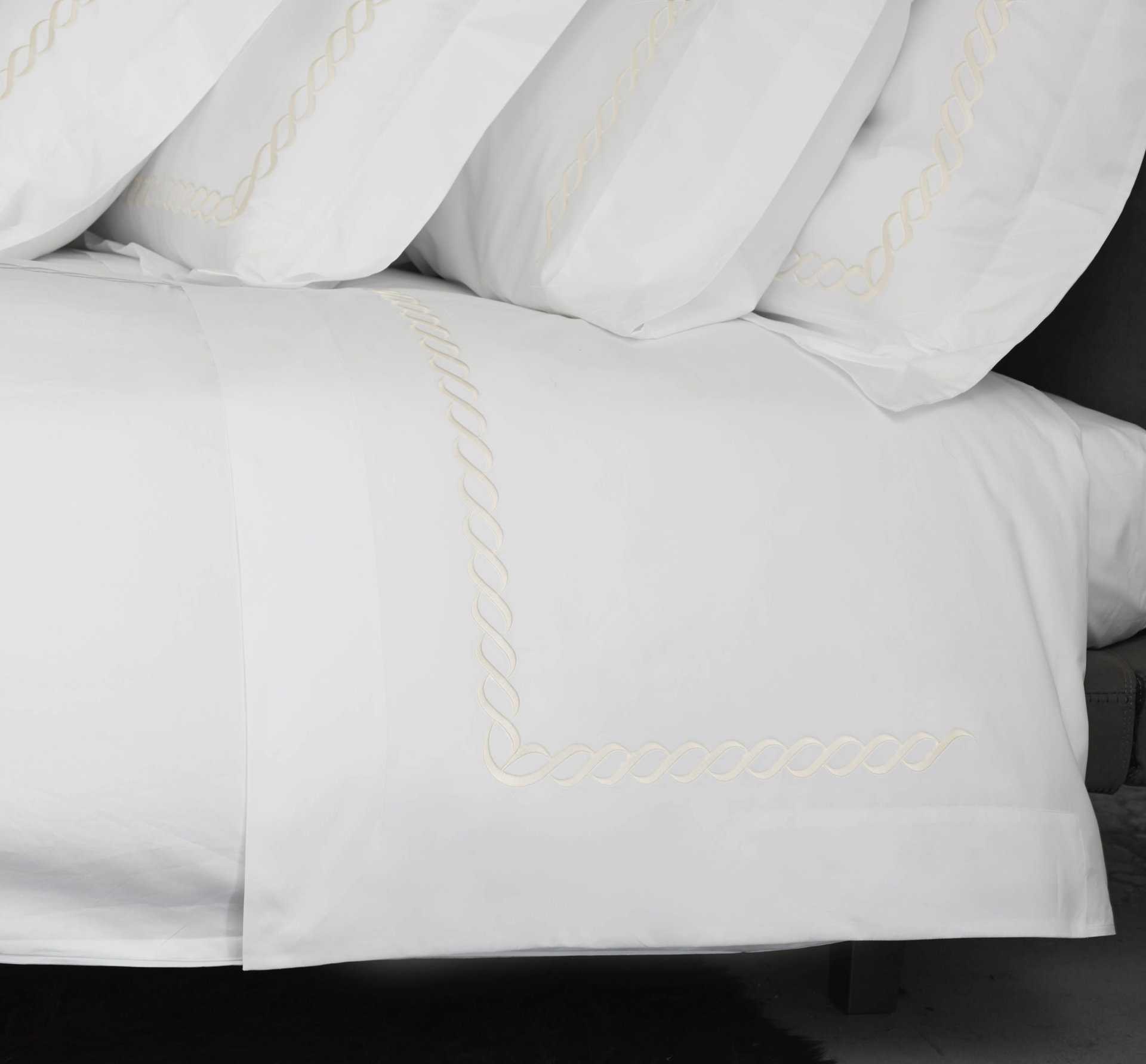
One example is the Soffio Flat Sheet, made from 100% long-staple cotton percale and crafted in Italy. Its white ground and colored embroidery pair a crisp cotton weave with a decorative detail. The listed specification gives a thread count of 600. That figure is one piece of information, not a complete verdict on how the sheet will feel: fiber, yarn, weave, finishing, and personal preference still matter.
Sateen: smooth, supple, and softly luminous
Sateen offers a different kind of comfort. Its surface feels smoother and often more fluid against the skin, with a gentle sheen created by the weave. The fabric typically drapes more closely than percale, giving the bed a softer, more enveloping look. People who like a polished appearance or a silky hand may find sateen especially inviting.
That smoother surface can feel warm and cozy, which is a benefit in a cool room or for someone who dislikes the crispness of percale. But warmth is not an automatic property of every sateen sheet. Fabric weight, cotton quality, finishing, room conditions, and bedding layers all influence the experience. A lightweight sateen may feel different from a dense one, just as a light blanket and a heavy duvet change the bed’s overall comfort.
Sateen’s surface floats can be more vulnerable to snagging or abrasion than the balanced structure of percale, depending on the yarn and fabric construction. That does not make it delicate by definition. It does mean that care matters: avoid rough handling, follow washing guidance, and take care with zippers, hooks, or other items that could catch on the cloth.
Which weave feels cooler?
For many people, percale is the natural starting point when cooler sleep is the goal. Its crisp hand and comparatively airy feel can make it seem less close against the skin than sateen. That perception matters: comfort is partly physical and partly sensory. A sleeper who dislikes clingy or silky fabric may experience percale as cooler even when both sheets are made from cotton.
Still, “cooling” is not a fixed measurement of a sheet. It describes a personal experience shaped by skin temperature, humidity, airflow, bedding, and sleep habits. A person who runs warm in a humid bedroom may respond differently from someone who sleeps in a dry, air-conditioned room. A thick mattress protector, foam layer, duvet, or tightly closed bedroom can affect heat more than a change in weave.
If you wake hot, consider the whole arrangement before replacing every layer. Try a lighter cover, reduce unnecessary blankets, check whether air can circulate around the bed, and choose sleepwear that does not trap heat. A breathable cotton sheet can contribute to comfort, but it works within the conditions of the room and the rest of the bedding.
In practical terms, percale is often favored by people seeking a crisp, less enveloping feel; sateen is often preferred by those who want smoothness and drape. Neither is universally cooler for every sleeper. When possible, touch a fabric sample, read care and construction details, and consider how you already respond to cotton shirts, pillowcases, or other woven fabrics.
Look beyond thread count
Thread count is the number of threads counted in a square inch of fabric, but it cannot tell the whole story. The number may be affected by how threads are counted and by the thickness and structure of the yarn. A high figure does not automatically mean better cotton, greater durability, or a more breathable sheet. Nor does a lower figure necessarily signal poor quality.
Cotton fiber deserves at least as much attention. Long-staple cotton has longer fibers, which can be spun into smoother, more cohesive yarns. The length and quality of the fiber influence the fabric’s surface and resilience, though the final result also depends on spinning, weaving, finishing, and manufacturing standards. A product description that identifies fiber content and weave is more useful than a number presented without context.
Fabric weight and finishing also affect touch. A percale sheet can feel crisp and light or more substantial, depending on its yarns and construction. Sateen can range from fluid and fine to dense and weighty. Finishing processes may alter softness or surface feel, and laundering can change a fabric gradually as it settles into regular use.
A thoughtful comparison therefore reads the full specification: fiber composition, weave, stated origin, care instructions, and any meaningful construction details. For the Soffio Flat Sheet, for example, the available information identifies long-staple cotton percale, Italian manufacture, colored embroidery, and a stated 600 thread count. Together, these details offer a clearer picture than the count alone.
Room conditions can change the answer
A sheet is in direct contact with the sleeper, but it does not exist in isolation. The bedroom’s temperature and humidity affect how warm a bed feels. Air circulation can matter, as can sunlight during the day, heating systems, and the number of people sharing the bed. A room that retains heat may make almost any bedding feel warmer by morning.
The mattress and the layers above it are part of the equation too. Mattress materials, a protector, a topper, a fitted sheet, a flat sheet, and a comforter each contribute to the overall feel. If the bed is already heavily insulated, switching from sateen to percale may help only modestly. Conversely, a breathable sheet may make a more noticeable difference when the rest of the bedding is light and the room is comfortable.
This is why the best choice is personal and contextual. A warm sleeper in a well-ventilated room may find percale a meaningful improvement. Another person may sleep soundly on sateen because its smooth surface feels comfortable and their bedding is light. The goal is not to follow a universal rule; it is to understand which factors you can adjust.
Care habits affect comfort and lifespan
Cotton sheets accumulate body oils, perspiration, dust, and detergent residue. Regular laundering helps keep them fresh, but a harsh routine can shorten their useful life. Follow the manufacturer’s instructions for water temperature, cycle, and drying. When guidance allows, a gentle wash and moderate drying can reduce stress on yarns and seams.
Use detergent in a measured amount. Excess detergent may leave residue that changes the hand of a fabric, while strong bleaching or aggressive stain treatments can weaken fibers or alter color. Avoid overloading the washer, which can prevent sheets from moving freely and rinsing well. Removing them from the dryer promptly can help limit deep creasing, especially with percale.
With sateen, take particular care to prevent snags from zippers, fasteners, or rough-edged items in the wash. With percale, expect a naturally relaxed texture rather than a permanently pressed finish. Neither weave should need complicated treatment to be comfortable. Consistent, label-appropriate care is usually more valuable than attempts to force a fabric into a texture it was not designed to have.
A simple way to decide
Start with the sensation you want when you get into bed. If you like a crisp, matte surface and a lighter, less draped feel, percale is a sensible place to begin. If you prefer a smooth, soft surface with a more fluid look, sateen may be the better match. These preferences are not superficial: the fabric you enjoy touching is more likely to make the bed feel inviting.
Next, consider your sleep environment. Warm sleepers who already use a substantial duvet may want to test a lighter cover before judging the sheet alone. Those in cooler rooms may welcome sateen’s supple feel. If your room is humid or poorly ventilated, focus on airflow and bedding layers as well as weave.
Finally, compare construction, not just marketing language. Look for clear fiber information, a named weave, practical care directions, and a fabric description that matches your expectations. If a detail is missing, treat broad claims cautiously. A sheet can be well made without a dramatic promise to “cool” the body overnight.
- Choose percale if you value crispness, a matte surface, and an airy, less enveloping feel.
- Consider sateen if you prefer a smoother hand, gentle sheen, and softer drape.
- Check cotton quality by looking for clear fiber details, including whether long-staple cotton is specified.
- Read beyond thread count and weigh weave, yarn, fabric weight, finishing, and care together.
- Assess the whole bed because room temperature, airflow, mattress materials, and blankets can outweigh the difference between weaves.
The verdict: comfort is a construction, not a number
Percale and sateen offer two distinct interpretations of cotton. One is crisp, plain, and often associated with an airy feel. The other is smooth, softly lustrous, and more fluid in its drape. Their character comes from how the yarns are woven, but the final experience depends on the quality of those yarns, the fabric’s weight, how it is finished, and the conditions in which it is used.
For cooler sleep, percale is a strong option for people who prefer a light, crisp surface. It is not a guarantee of lower body temperature, just as sateen is not inevitably too warm. A breathable cotton sheet is one considered choice among several: reduce excess layers, support air circulation, and select fabric that feels good through the night rather than relying on a headline specification.
The most useful sheet is the one that matches both the sleeper and the room. Look beyond thread count, understand the weave, and give care instructions their due. Once those basics are clear, the decision becomes less mysterious: crisp or smooth, structured or draped, percale or sateen. The right answer is the one that helps you settle in comfortably—and keeps feeling right after the first wash.